What are you for?
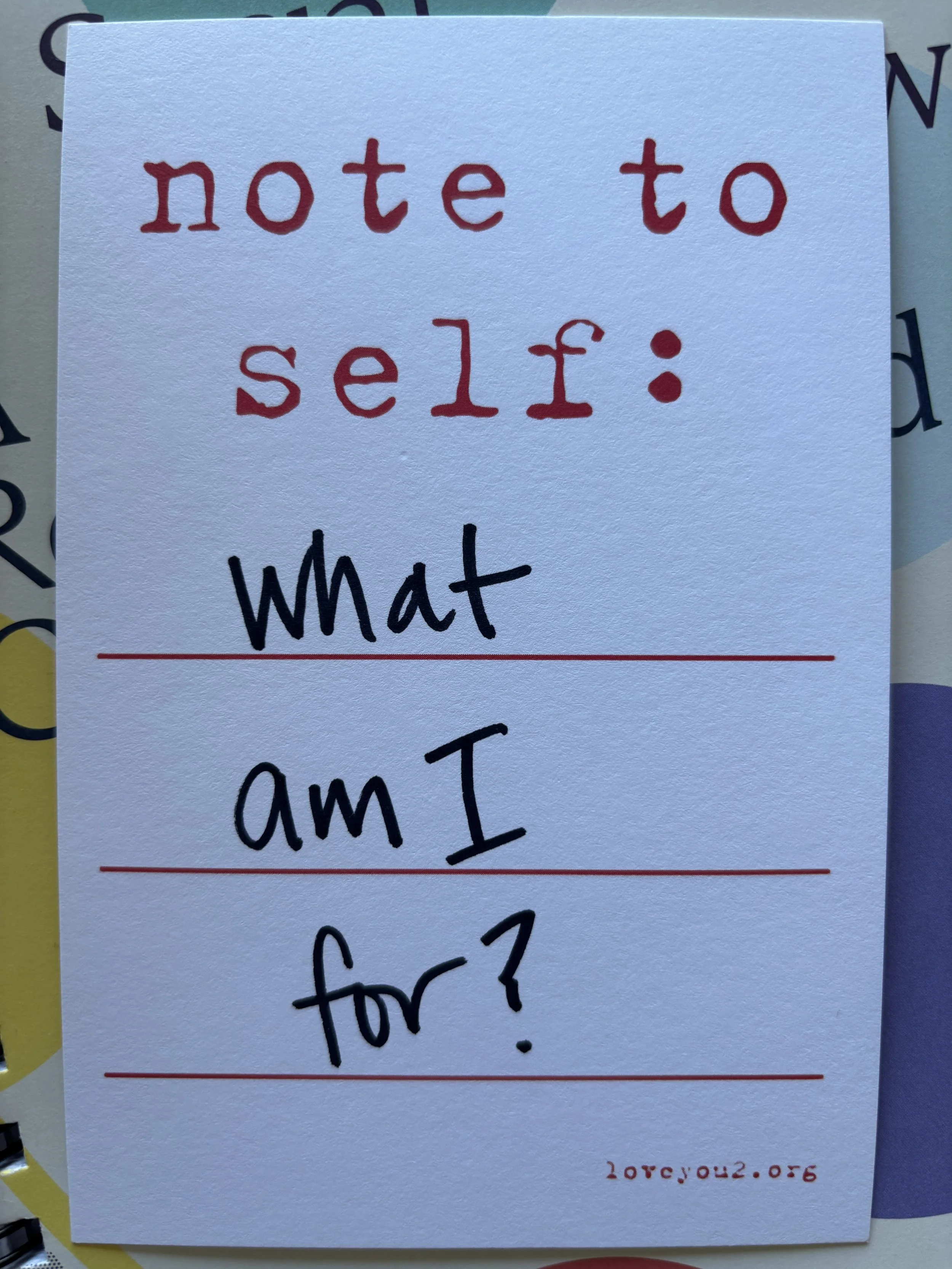
I’m back in San Francisco from teaching Your Best Public Health Life at Emory last weekend. It is a life-affirming, future-inspiring experience to see folks come in stuck, lacking hope, or overwhelmed and ultimately articulate their why, what they are for. This is not a simple process, nor is it easy to do alone.
Amidst an era-defining shift, we may begin by recognizing what no longer works for us, or find that our values or beliefs are in opposition to the environment we are in. This is the beginning, the first phase of shifting. But we can get stuck here.
So, some of us, get really good at knowing what we’re against. We have a well-articulated argument, our analysis is sharp, we are often grounded in theory, lived experience, or both. The analysis is so refined, it’s become so correct, it’s impenetrable. But it’s not an analysis that leads us to a different future.
What the analysis lacks is a bridge—it’s not a bridge from here to there.
When analysis keeps us stuck
The problem is when the analysis becomes our familiar, our companion, our reaction to every prompt. We find ourselves stuck in a loop, driving a roundabout without knowing which turnoff is ours. Inertia.
When we’re stuck. In the wake of a betrayal, by another human or by a system. When we’ve had an awakening, when new data comes in, or we have an insight that we didn’t have before.
I’ve experienced this myself, seeking support because I wanted something to change. Almost immediately, I began drafting an essay in my head: bold headings and some all-caps insights (they were genius!), my ready analysis of what was wrong.
I caught myself. Hey girl, the job here is to see beyond what is right in front of you, beyond what is familiar. To believe another response is possible.
Knowing what we are for
When we are ready for a change, whether that is shifting from burnout to thriving, needing to shift a relationship, or setting an ambitious goal—we need a why linked to a vision for the future. We have to imagine and describe what we are for.
We have to know what we are for.
If I were to talk to my stuck self in that situation above, where I was armed with my righteous analysis, I’d say:
I’m going to say something that may feel confrontational. I’m saying this because I know you want to make a shift, and I see that you are stuck. Rather than describing what you’re against, I need you to tell me what you’re for. The process can begin with what you dislike, what you hate, what you are against. But it can’t end there. What you are for is organic, is yours, from your bones, what you are alive for.
The truth was, I did not yet know what I was for. Just that I was fed up with treating the symptoms, I was against what is, and I wanted to believe that something else could be. But I nearly thwarted myself with the analysis, a skill that got me to the beginning of a change process but would not bridge me to a future.
What a beautiful experience to be with folks in the Emory course as they did the work, dug deep, got caught in familiar thinking (as we do), and ultimately found their personal whys. Some stayed close to their current area of work, deepening themes or tightening their focus. Others went further afield. Each person shared their why with a smile, and a few of their whys gave me goosebumps as they were so specifically true for that person. It’s a kind of aliveness that can’t be borrowed; it can only be discovered.
What are you for? What do you want to bring more of into the world?